
Finding Orleans Parish Residents
Begin with the detail that is least likely to be shared by two people. An exact street address points toward the Assessor and City Property Viewer. A full name, ZIP code, and birth month and year fit the Louisiana Voter Portal. A former address or an old family name may be better suited to the City Archives directory shelf. These are separate rolls, not one master list. Each answers a narrower question and has its own access rules.
Ownership is not the same as occupancy. A tax-roll mailing address may belong to an owner who lives elsewhere, while a renter may never appear in a parcel record. Treat each result as one part of a resident search. Match at least two keys, such as an address and middle initial, before joining records.
- Search the official property roll by street address, owner, or tax-bill number.
- Check the state voter form when the name, ZIP, and birth details are known.
- Use a matched owner or party name in the land and court indexes.
- For an earlier household, consult city directories, obituaries, and public archival indexes.
- Ask the named custodian for an offline record under Louisiana Public Records Law.
Orleans Parish Property Viewer
The New Orleans Property Viewer is the clearest first stop when an address is known. It joins City and Assessor data and says that its information is updated weekly. The public search accepts an address, an owner, or a tax-bill number. A parcel card can supply the owner name, mailing address, municipal district, square, parcel or GEOPIN, and recent conveyance context. Those keys bridge an Orleans Parish residents directory search into deeds, permits, tax rolls, and map layers.
| Search field | Best use | Important limit |
|---|---|---|
| Address | Open one parcel from a street number | Old numbers may need conversion |
| Owner | Find parcels under a recorded owner name | Does not prove residence |
| Tax bill | Return a known assessment account | Must match the current roll |
The viewer's mailing-address field can be a useful lead. It is still not proof that a person lives at either address. Compare it with a deed, a lawful voter result, or another dated source.
Orleans Parish Directory Offices
New Orleans and Orleans Parish are coterminous for this record environment, yet the records remain split among offices. The Civil District Court Clerk serves as the land recorder and keeps the Notarial Archives. The Assessor maintains the property roll. The Registrar of Voters handles local registration questions, while the Secretary of State operates the personal voter portal. When a web search fails, each office also provides a counter, phone, email, or request route.
Land Records and Notarial Archives
1340 Poydras Street, 4th floor
New Orleans, LA
(504) 407-0005
Orleans Registrar of Voters
1300 Perdido Street, Room 1W24
New Orleans, LA
(504) 658-8300
Confirm Orleans Parish Voter Records
The Louisiana Voter Portal is a personal registration lookup, not a public list of every person on a block. Its form uses first and last name, ZIP code, birth month, and birth year. That combination makes it useful for confirming that a likely match is registered in the expected area. Parish-level election information is available through a separate portal route and the local registrar.
Louisiana Revised Statute 18:154 controls access to voter records and protects specified information. State voter-list requests also have defined formats, fields, fees, and delivery limits. A missing portal response is not proof that a person left Orleans Parish. The name format, ZIP, birth details, protected status, or registration status may account for the miss.
The official Louisiana voter lookup shows the identity fields a registrant must supply.
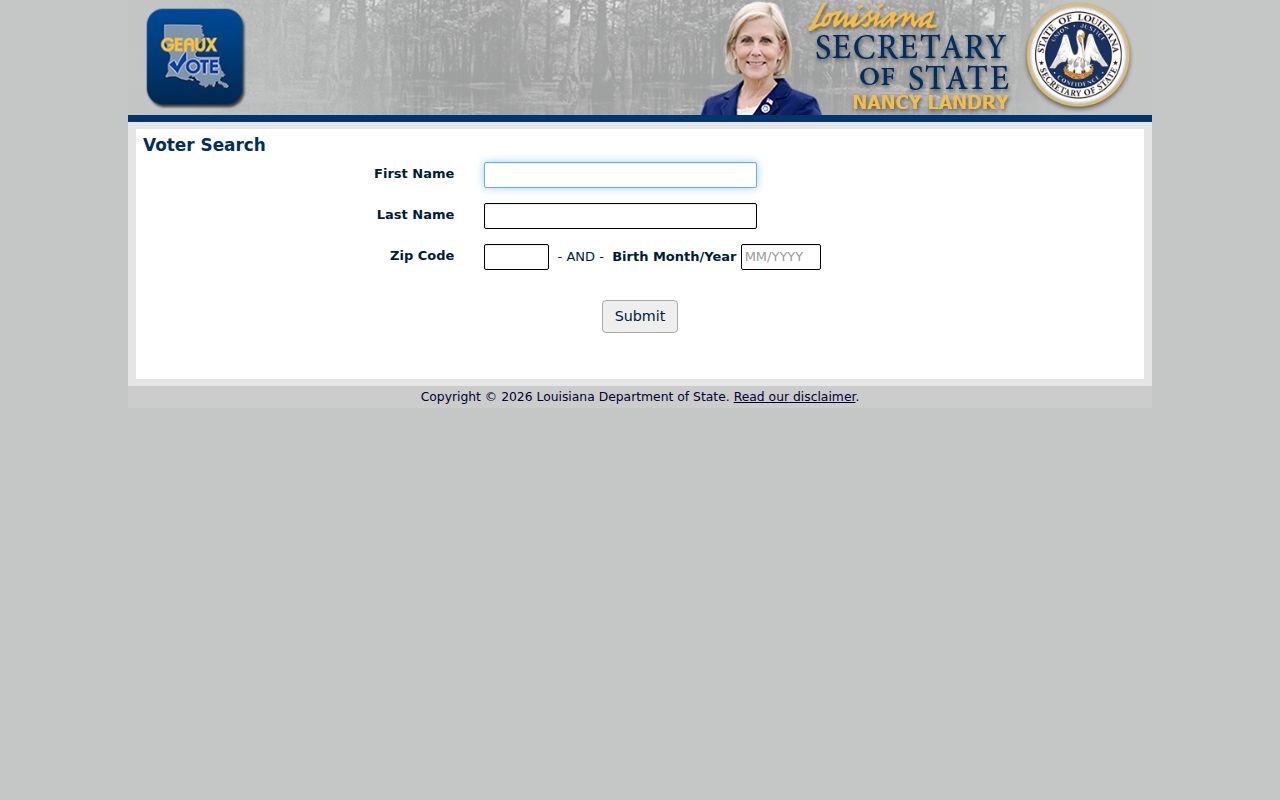
Its field combination helps prevent a loose name match from being treated as a confirmed Orleans Parish voter record.
Lawful use. Use Orleans Parish resident records only for lawful personal research. Never use an address or identity detail to stalk, harass, intimidate, or harm anyone.
Follow Orleans Parish Land Names
A person tied to real estate may appear as a buyer, seller, borrower, lender, or other party in the Clerk's land indexes. The Unified Land Records system covers the unified index from February 18, 2014 forward. Its images run from January 1, 2005 forward. Separate mortgage and conveyance indexes bridge earlier online periods beginning in 1987 and 1989. Older work can move to public terminals, open stacks, an off-site request, or the supervised Research Center.
- Index
- A list that points to a recorded act; it is not always the full image.
- Parcel
- A mapped unit of land with legal and tax identifiers.
- Grantor and grantee
- The parties transferring and receiving an interest in an act.
- Criss-cross directory
- A volume arranged by address or phone number rather than only by surname.
Public index access and document-image access are not identical. Subscription or escrow may be needed for remote images, while in-person terminals provide another route. Record the instrument number and parties before ordering a copy.
Current Orleans Parish Resident Rolls
No current Orleans Parish residents directory captures every household member. Official sources instead list people because of a specific public event or status. The property roll concerns assessed parcels. Voter records concern registration. Land indexes concern recorded acts. Court systems concern filed cases. Business and license searches concern entities or credentials. Their narrower purpose is also what makes their fields easier to interpret.
| Official source | Person or party shown | Custodian | Access route |
|---|---|---|---|
| Property roll | Recorded owner and mailing contact | Orleans Parish Assessor | Free viewer and office |
| Voter registration | Matching registered voter | Secretary of State and Registrar | Personal portal or lawful list request |
| Land index | Parties to recorded instruments | Civil District Court Clerk | Web index, terminal, or request |
| Court index | Named parties in filed matters | Each separate court clerk | Portal, clerk counter, or request |
| Commercial record | Entity officers or agents shown in filings | Louisiana Secretary of State | Free commercial search |
Use the date and purpose of the roll. A filing can show a past tie, and a mailing address can differ from the parcel's situs, meaning its physical location. The detailed one-person comparison belongs in the Orleans Parish resident lookup.
Check Orleans Parish Courts Separately
Civil, criminal, municipal and traffic, juvenile, and federal matters do not share one public search. The Civil District Court remote system handles its own case access. The Criminal District Court Clerk provides a separate office and inquiry path. Municipal and Traffic Court has its own records-request instructions and portal. Federal matters in the Eastern District of Louisiana use PACER. A resident search must check the court that could hold the record.
A case index is a lead, not a judgment about the person named. Read the docket and disposition. A docket is the chronological list of filings; a disposition records how the matter ended. Similar names are common, so compare the address, middle initial, filing date, and other lawful identifiers. Sealed, expunged, juvenile, or otherwise restricted material will not appear like an open case.
Orleans Parish Vital Index Trail
Louisiana treats birth and death certificates as closed records under La. R.S. 40:41, with eligibility and identification rules. Historical indexes provide a different route. The Louisiana State Archives vital-record index uses working genealogy cutoffs of births more than 100 years old, deaths more than 50 years old, and Orleans marriages more than 50 years old. Current Orleans marriage copies remain with the Louisiana Department of Health under its forms, fees, and age rules.
An index entry can establish that an event was recorded without giving the force or detail of a certified copy. If a certificate is closed, try the City Archives obituary index, church registers, a succession case, cemetery evidence, or a newspaper. Label the substitute source. Do not imply that it is the certificate.
The screenshot below comes from the State Archives vital-record index.
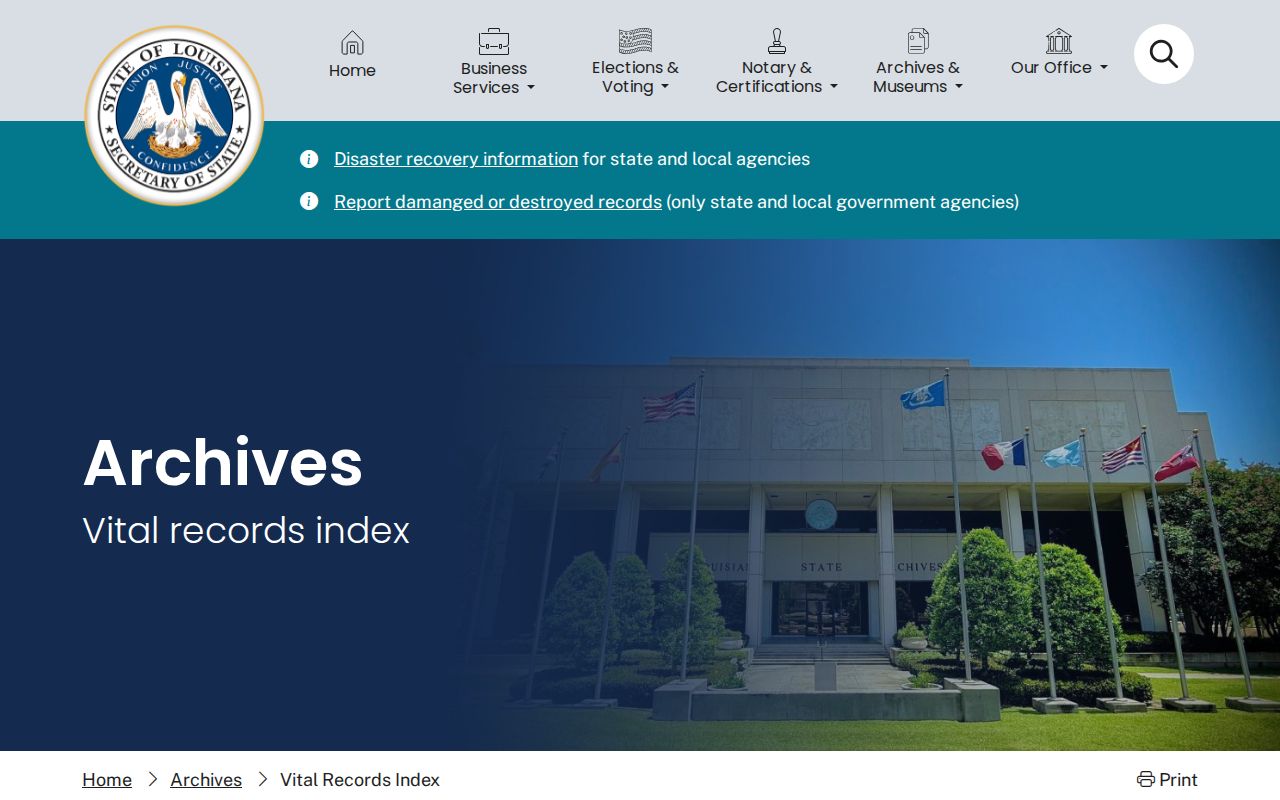
Its official cutoff and copy guidance help separate a public genealogy lead from a restricted modern certificate.
Orleans Parish Business Name Clues
The Louisiana Commercial Search can connect a personal name to an entity filing, registered office, or agent record. New Orleans One Stop adds address-linked permits, licenses, and code cases. Its basic search accepts a street address, name, or reference number. Advanced fields, CSV tools, and watchlists require an account. State board license lookups can add credential status where a board publishes it.
These sources establish filing or business links, not a private home address. Compare the entity name, role, date, and official filing before treating it as the same person. Unclaimed Property is another state-run name search, but a match remains subject to the Treasury's claim and proof process.
The commercial search screen is shown here.
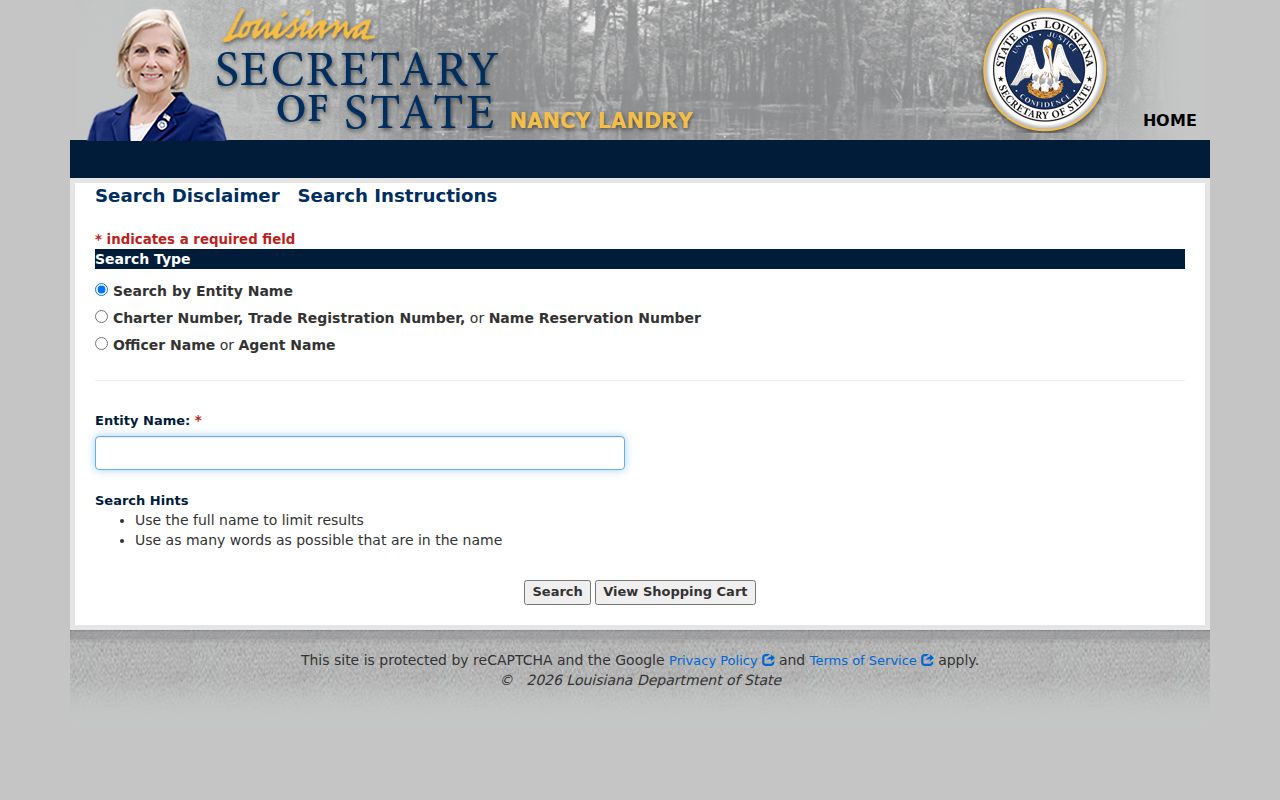
The result should be checked against the filing itself and at least one other Orleans Parish identifier.
Time-Stamp Orleans Parish Status
The Orleans Parish Sheriff roster, Louisiana DPS&C inmate information, LA VINE, and the State Police registry are current-status sources. They should never be treated as complete historical resident directories. A result can change after release, transfer, correction, or an updated registration. Save the access date and follow the custodian's identity warnings.
The DPS&C inmate information page explains the state route.
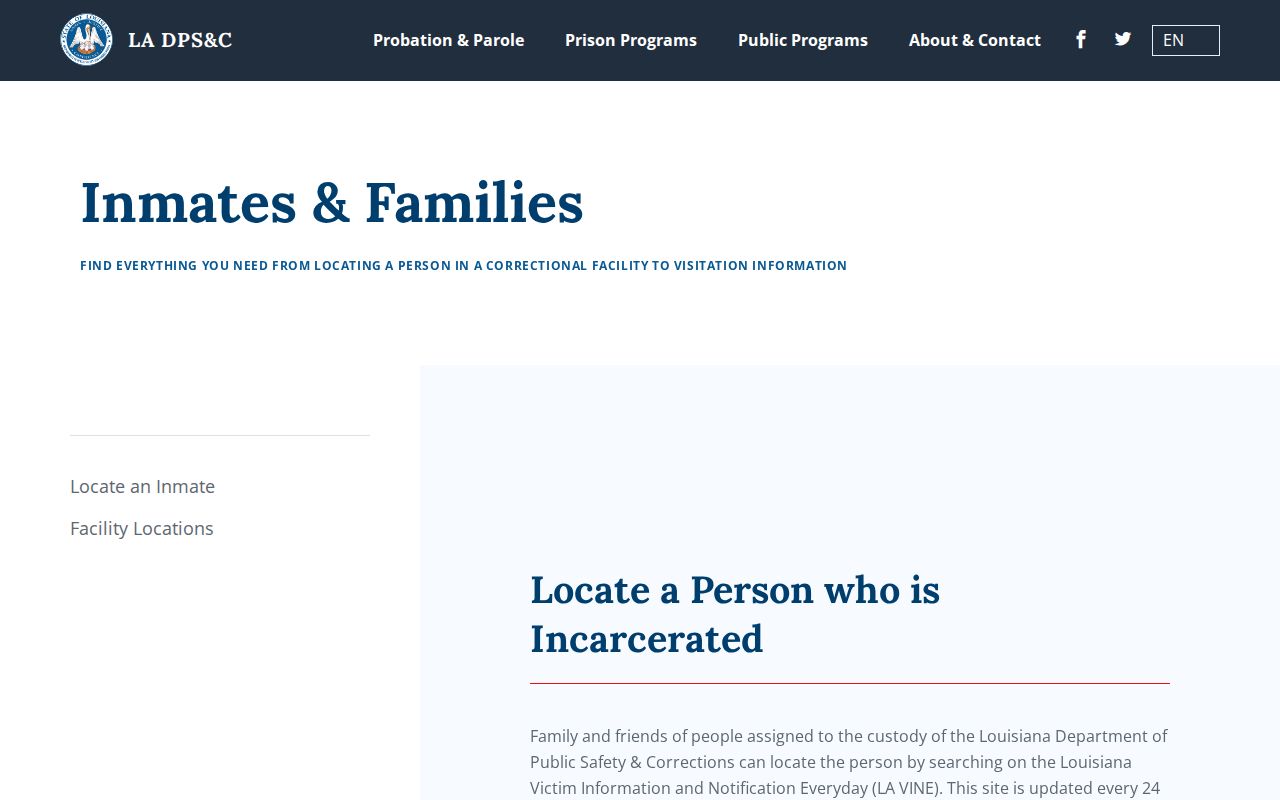
It is a lead for current custody information, not certified proof of a past address or a complete life history.
Likewise, the State Police registry information page sets the rules for its linked search.
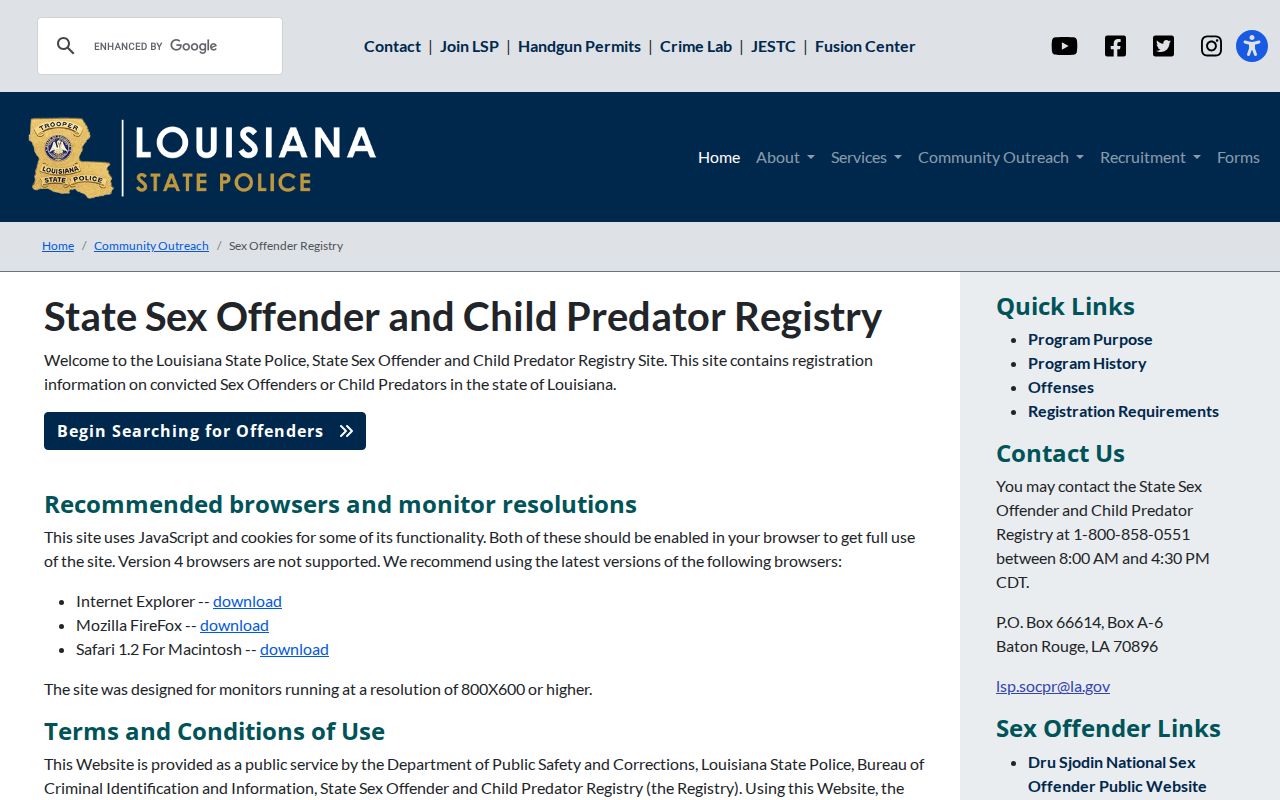
Use its official warnings, confirm identity carefully, and do not republish sensitive details without a lawful reason.
Historical Orleans Parish Directories
New Orleans city directories begin in 1811. City Archives identifies microform coverage for 1811 through 1860, a Civil War-era gap from 1862 through 1865, later print and microfilm runs, and reverse-search tools. Haines criss-cross volumes begin in 1966, while address-based reverse searching appears by 1932. These books may show a householder, spouse or widow notation, occupation, business address, and home address.
A negative result does not prove absence. A resident may be omitted, listed under initials, recorded under a name variant, or living in a household headed by someone else. OCR can also miss a clear printed entry. Browse nearby alphabetic entries and check the abbreviation key. The Orleans Parish city directory collections cover the shelves and access routes in depth.
Translate Old Orleans Parish Addresses
New Orleans street names and numbers changed over time. City Archives provides separate street-name tables and early-1890s number conversion guidance. The number tables use present hundred blocks and cross streets, but they do not promise a perfect one-to-one conversion. A failed old-address search should be tested under the former street name, a nearby cross street, ward, municipal district, square, and legal description.
This matters across the Orleans Parish residents directory. A directory may preserve the old number, the Assessor may use the modern situs, and a notarial act may rely on a square and lot. Save each form rather than forcing one modern address onto every era.
When Orleans Parish Search Stops
Online access is only one channel. The Clerk offers land-record systems, public terminals, open-stack retrieval, off-site requests, and supervised historical research. City Archives and New Orleans Public Library provide print, microform, appointment, staff, and copy-request routes. The State Archives has an online catalog, a research library, and a mail genealogy request form. Courts and city departments also accept records requests through their own custodians.
Under Louisiana Public Records Law, a useful request names the custodian, record type, date range, known identifiers, preferred electronic format, and a fee ceiling. Keep the request and response. Describe a portal failure as a failure to locate the record online, not proof that the record never existed.
| Route | Best for | What to bring or send |
|---|---|---|
| Public counter or terminal | Indexes and images not open on the web | Names, date range, address, instrument or case number |
| Library or archive | Directories, newspapers, maps, and old court material | Name variants, former street, and likely year |
| Written records request | Identifiable city records not already posted | Custodian, scope, format, and fee ceiling |
Protect Orleans Parish Residents
Public does not mean unrestricted. Louisiana's Address Confidentiality Program supplies a substitute address to eligible survivors, and La. R.S. 44:11.2 protects specified information for covered individuals. Voter records have their own exceptions. Vital certificates, motor-vehicle data, utility customer details, sealed cases, and juvenile matters can also be restricted. Do not try to work around a protection by combining several weak clues.
Correct an error with the office that created the record. Save the source URL, access date, and record identifier. If two records disagree, keep both candidates separate and mark the identity unresolved. That small step prevents a common name from turning into a false resident profile.